What Happens During a Countertop Installation
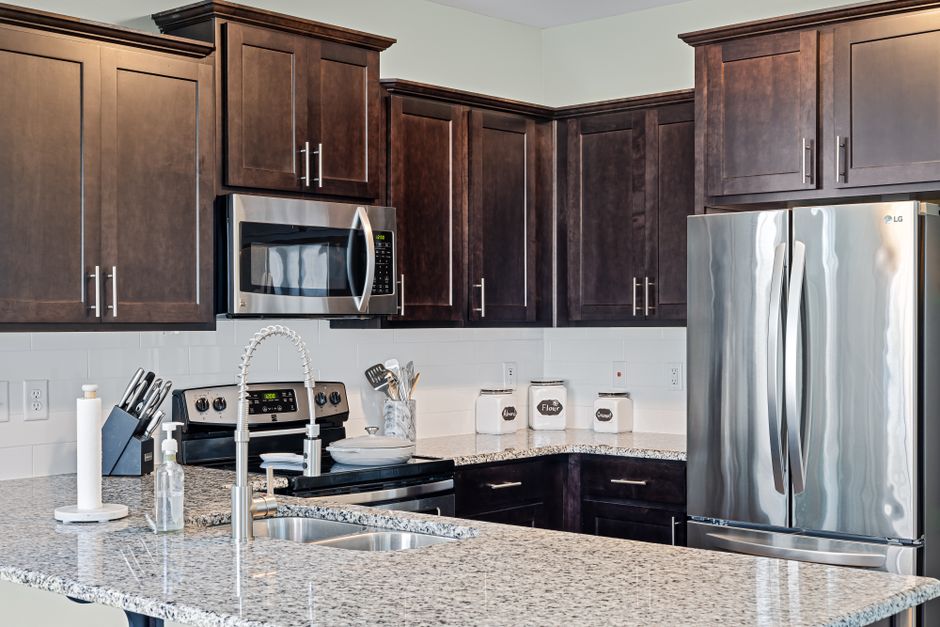
Three-quarters of an inch of stone can span a lot of cabinet, but only a few inches past the support before it needs help, and every teardown that countertops louisville boulder yellow cab has logged shows the same thing: the job is a chain of small mechanical steps, and the weak link is usually one skipped step. This page walks that chain for a countertop install in Louisville, KY, from the first measurement to the last bead of caulk.
Templating after the cabinets are set
Templating happens once the cabinets are level, fastened and final. The fabricator captures exact dimensions with a digital laser system or with rigid strips cut and glued to fit the walls. Walls in older Louisville homes are rarely square, so the template records every bow and corner. Templating day is not the end of the install. It is the start of the fabrication clock.
Cutting in the shop
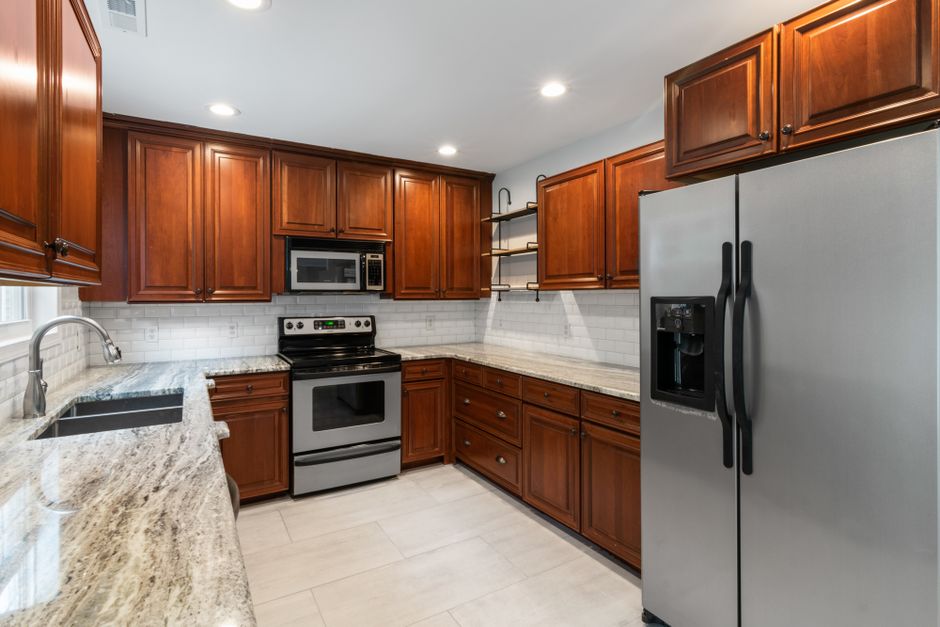
The fabricator lays the template over a slab and cuts with a bridge saw and a waterjet. Undermount sink cutouts are made at this stage, along with the edge profile. An eased edge is quick. A bullnose or a waterfall edge takes more grinding and polishing time. Granite, quartz, quartzite and marble all go through the same sequence, though each cuts differently.
Seam placement and setting
Seam placement is the fabricator's call, based on slab size and layout. A long run or an L-shaped kitchen often needs a seam, and no honest shop promises that seams can always be avoided. A seam is filled with color matched epoxy. Seam setters use suction cups to pull the two pieces together and bring them flush before the adhesive cures. A good seam is tight, level to the fingertip and placed away from the sink where possible.
Sinks, overhangs and support
An undermount sink is held by clips or brackets anchored to the underside of the stone, plus adhesive. The cutout is the thinnest part of the top, so support there matters. Any overhang beyond what the material can carry on its own needs hidden steel brackets or corbels. A breakfast bar that sticks out a foot with nothing under it is a crack waiting for someone to lean on it.
Dust, hookup and cure time
Cutting and grinding engineered stone produces respirable crystalline silica dust, so shops run water on the cut and use dust control and respirators. On site, the top is set on the cabinets with adhesive, though it can still be lifted out later if a repair demands it. Plumbing is reconnected after the top is set. Caulk and seam adhesive need time to cure before heavy use, so the sink stays light and the pots stay off the seam for a day or more.